Liquid Cooling Article Series – Part 2
This section examines rear-door heat exchangers, direct-to-chip liquid cooling and immersion cooling technologies.
How Are Thermal Management Systems Evolving?
Data center cooling technologies have always had to evolve to support the changing requirements of the IT systems they serve. In previous years, air-cooling systems adapted to higher densities by moving cooling closer to the heat source and using containment. However, these approaches provide diminishing returns as heat densities rise above 20 kW per rack.
Several liquid cooling technologies have emerged to meet the cooling requirements of high-density racks.
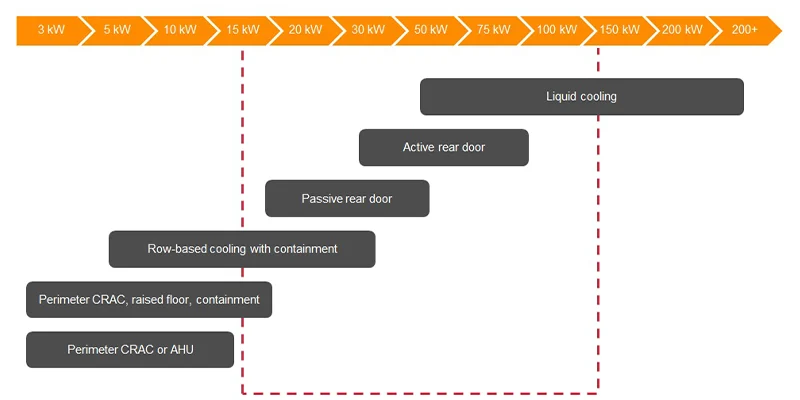
The diagram above presents the cooling technologies best suited to different rack-level heat loads. Let us examine these solutions together in greater detail.
1. Rear-Door Heat Exchangers
Rear-door heat exchangers are an innovative technology that uses the high thermal transfer capabilities of liquid to manage rack densities above 20 kW.
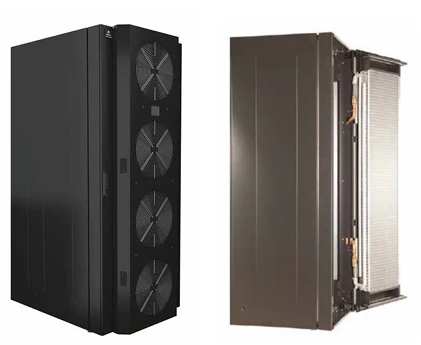
Passive or active rear-door heat exchangers are among the key infrastructure components used for direct liquid-assisted cooling, as shown in the image below.
The rear door of the rack functions as a liquid heat exchanger. In a passive design, the server fans push heated air through a liquid-filled coil installed in place of the rack’s rear door. The coil absorbs the heat and cools the air before it is returned to the data center. Active heat exchangers include EC fans that draw air through the coil and support heat removal.
These systems form the basis of a hybrid data center cooling approach in which liquid and air cooling operate together.
2. Direct-to-Chip Liquid Cooling
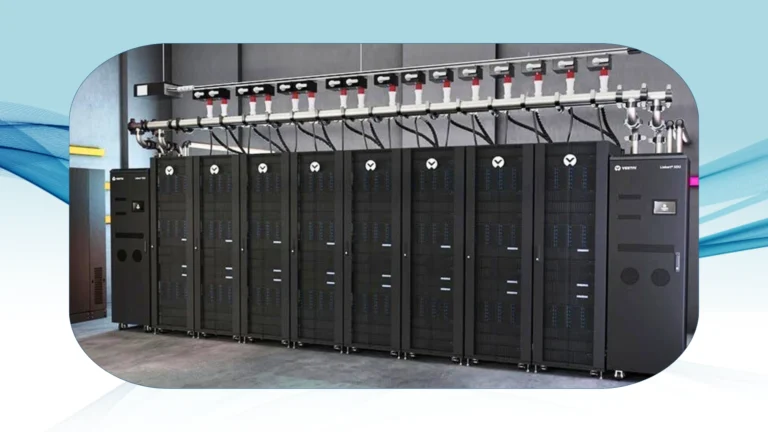
Cold plates connected directly to server chips are positioned on heat-generating components such as CPUs, GPUs and memory modules. Heat is transferred through single-phase cold plates or two-phase evaporative cooling units.
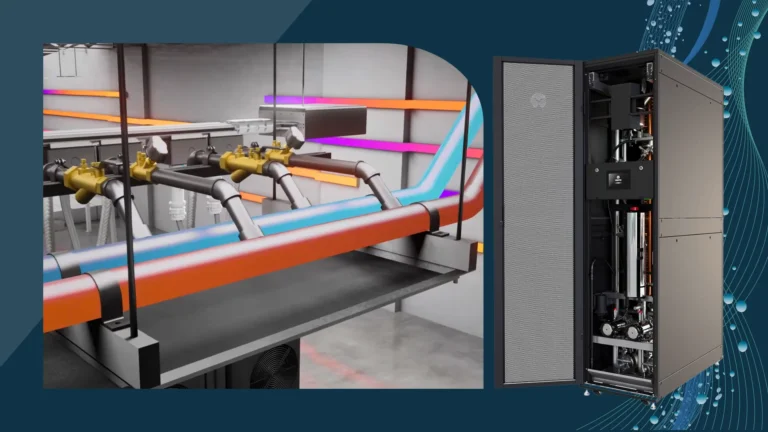
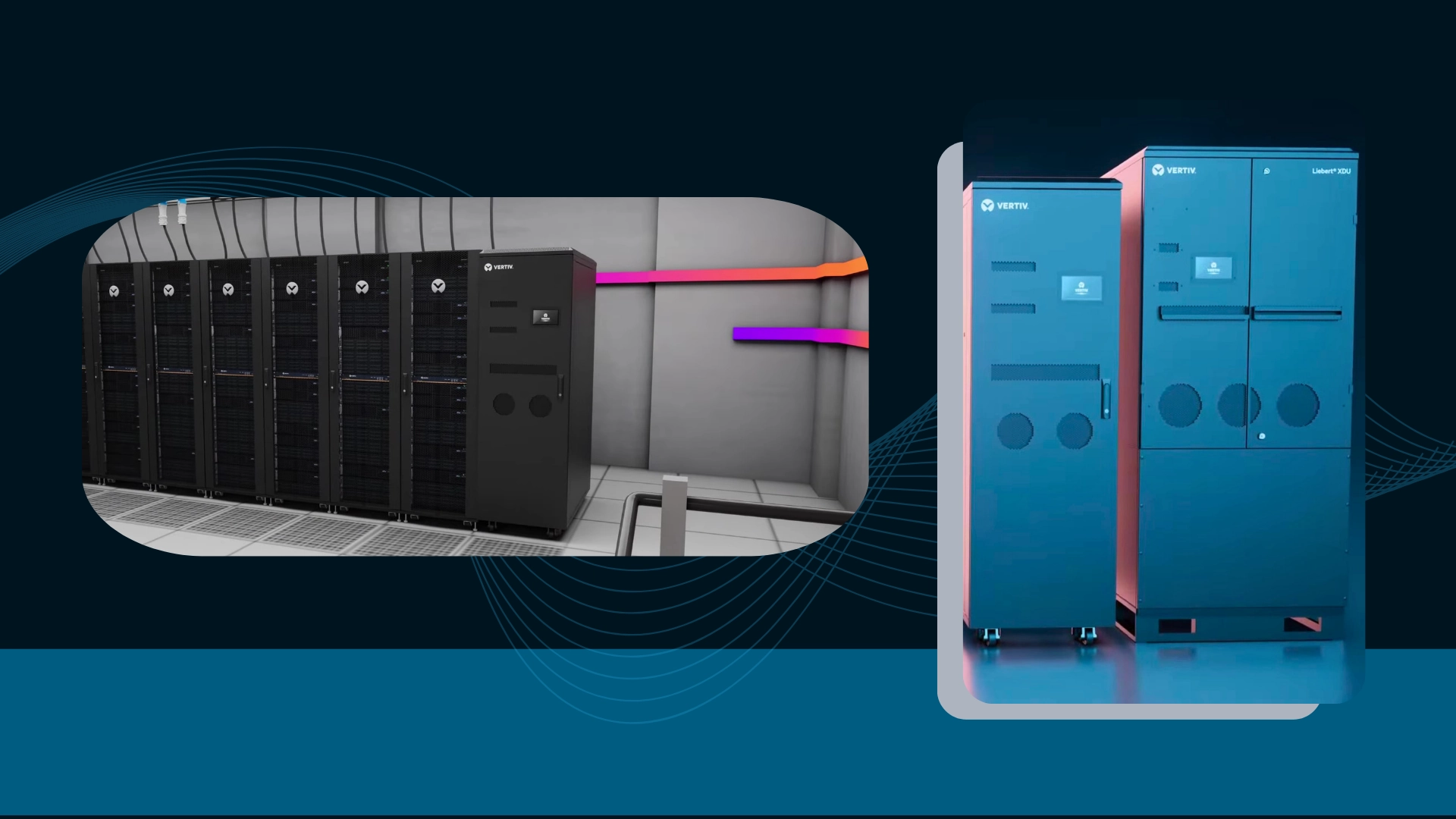
Single-phase cold plates use liquid supplied by the CDU to absorb the available heat load.
The fluid used in the system is selected according to thermal requirements, fluid properties and viscosity.
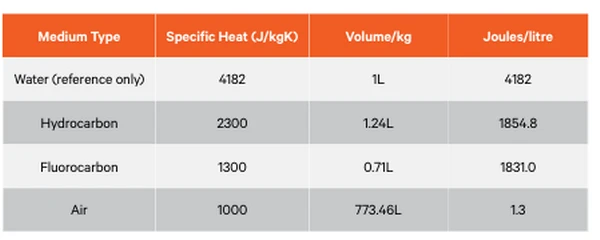
Water provides the highest efficiency, although water-glycol mixtures can also be used in certain applications. Heat transfer is slightly lower with a water-glycol mixture, but it can be well suited to the pumping characteristics of the CDU.
These systems can also use dielectric fluids. Dielectric fluids help reduce risk in the event of a leak. However, it is important to note that their heat-transfer capabilities are not as high as those of water-glycol mixtures. The comparison can be seen in the table below.
In two-phase cold-plate systems, a low-pressure dielectric fluid is delivered to the evaporators. Heat generated by the servers causes the fluid to boil, allowing heat to leave the evaporator in vapor form.
In general, direct-to-chip cooling cannot transfer 100% of the heat generated by high-density loads. This approach typically removes approximately 70–80% of the total heat load. This limitation is one of the main reasons why a hybrid cooling approach is required.
The heat generated by CPUs and GPUs can be managed through direct-to-chip liquid cooling. However, other components within the same system, including power supplies and IC capacitors, remain outside the chip-cooling loop. For this reason, air and liquid cooling solutions can be used together, and project planning should take all these factors into account.
3. Immersion Cooling
In immersion cooling systems, servers and other components are submerged in a specially formulated dielectric fluid. This approach eliminates the need for air cooling. Among liquid cooling technologies, immersion cooling offers some of the highest thermal transfer capabilities and represents a fully liquid-cooled solution.
As with direct-to-chip cooling, both single-phase and two-phase immersion cooling systems are available.
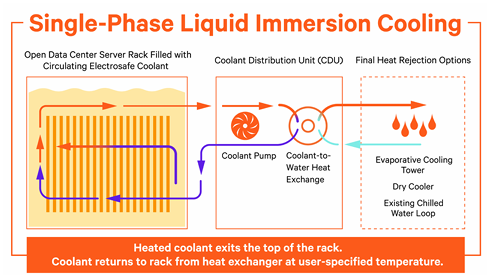
In a single-phase system, as illustrated below, servers are installed vertically within a dielectric fluid. Heat is transferred through direct contact between the server components and the coolant, then removed through heat exchangers connected to the CDU. In the data center, the CDU is generally installed as a separate component.
Define the Right Liquid Cooling Technology
Evaluate which solution—rear-door heat exchangers, direct-to-chip cooling or immersion cooling—is best suited to your data center infrastructure with our technical team.