Liquid Cooling Article Series – Part 4
This section examines the limitations of traditional air cooling, the advantages of liquid cooling and the transition of existing data centers to next-generation cooling technologies.
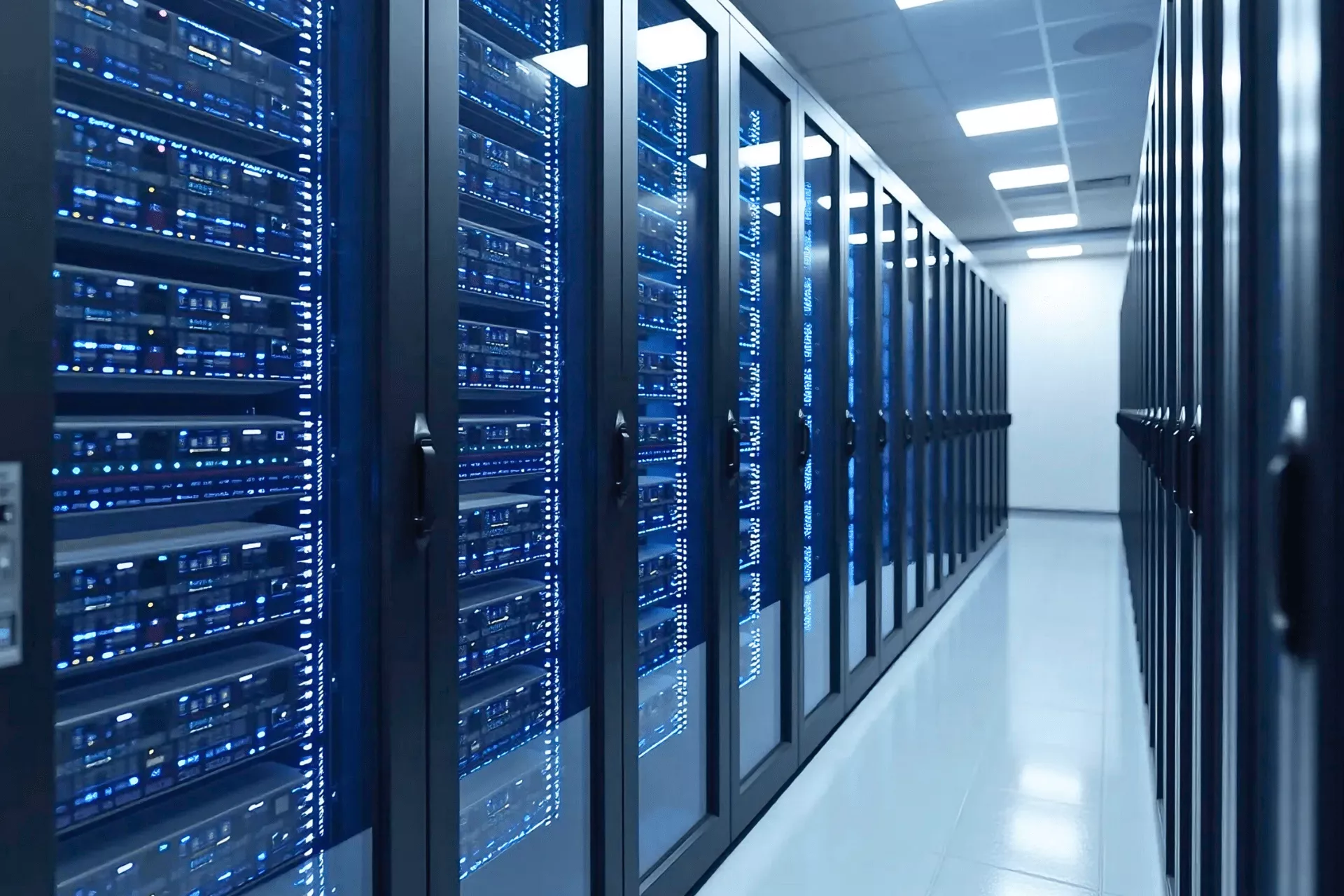
High-density workloads are no longer the exception; they have become the norm. Artificial intelligence, machine learning and advanced analytics applications are causing data center hardware to generate more heat than ever before. At this point, traditional air-cooling systems are no longer sufficient. The solution is clear: Liquid cooling is shaping the future of data centers in terms of both energy efficiency and performance.
The Limitations of Traditional Air Cooling
Although traditional air-cooling systems are effective up to a certain point, they have several disadvantages when faced with high-density workloads:
- Limited Cooling Capacity: Air-cooling systems generally operate effectively at rack densities of up to 20 kW. However, this limit is insufficient for AI and HPC applications.
- High Energy Consumption: According to McKinsey & Company, cooling systems account for approximately 40% of total energy consumption in data centers.
- Increased Costs and Space Requirements: High-density cooling requires more equipment and space, which increases costs.
The Advantages of Liquid Cooling
- Higher Heat Transfer: Liquid transfers heat approximately 3,000 times more effectively than air. This becomes especially critical for rack loads above 50 kW.
- Reduced Energy Consumption: According to a joint study by Vertiv and NVIDIA, liquid cooling provides a 10.2% reduction in total energy consumption. It also offers an improvement of up to 15% in Total Usage Effectiveness (TUE).
- Waste Heat Recovery: Recovered waste heat can be reused for building heating or other operational processes. This helps reduce the carbon footprint.
Liquid Cooling Implementation in Türkiye: HyperDC Data’s Infrastructure Capabilities
Liquid cooling technologies are gaining momentum worldwide, and this transformation is also progressing rapidly in Türkiye. HyperDC Data plays a critical role in helping data centers transition to these next-generation cooling systems.
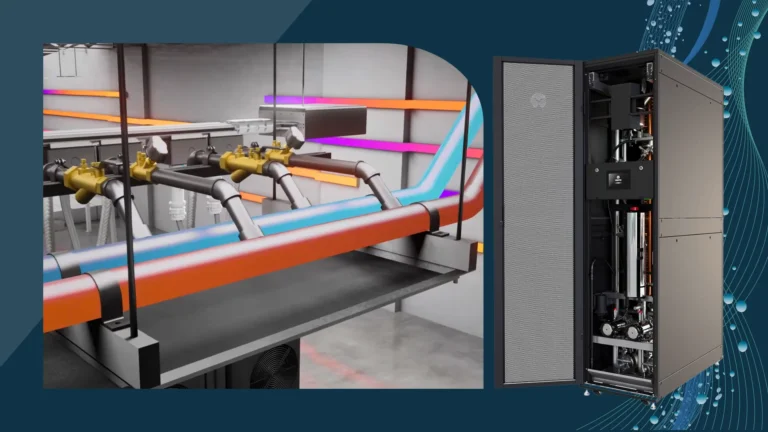
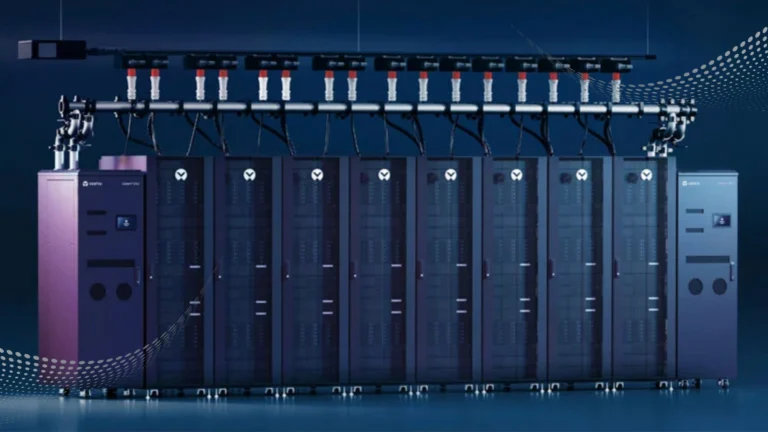
Solutions developed by Vertiv, including direct-to-chip cooling, immersion cooling and Coolant Distribution Units (CDUs), are being implemented in the local market through HyperDC Data. Through this collaboration, data centers in Türkiye can not only keep pace with global standards but also enable a sustainable and highly efficient infrastructure transformation.
Vertiv Liquid Cooling Solutions
1. Direct-to-Chip Liquid Cooling
In this method, cooling plates come into direct contact with heat-generating components such as processors and GPUs. These systems remove 70–75% of the heat generated by the equipment through liquid cooling, while the remaining 25–30% is managed by air-cooling systems.
2. Immersion Cooling
Servers are fully submerged in thermally conductive dielectric fluids. This method provides the highest level of energy efficiency and is particularly suitable for AI and HPC applications. Vertiv’s immersion CDU provides effective heat management within these systems.
3. Coolant Distribution Units
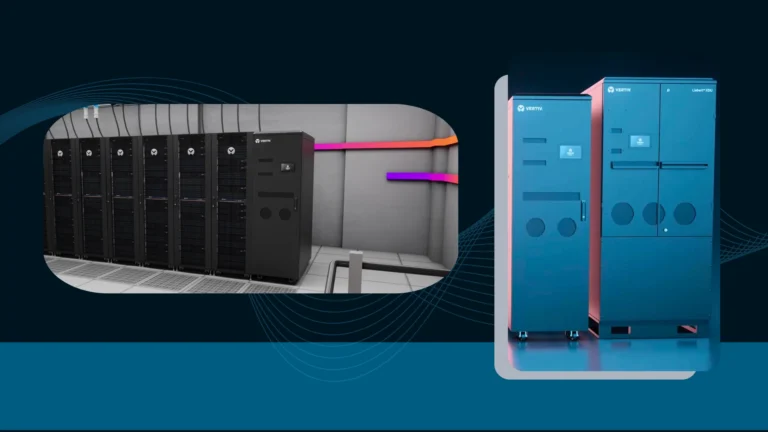
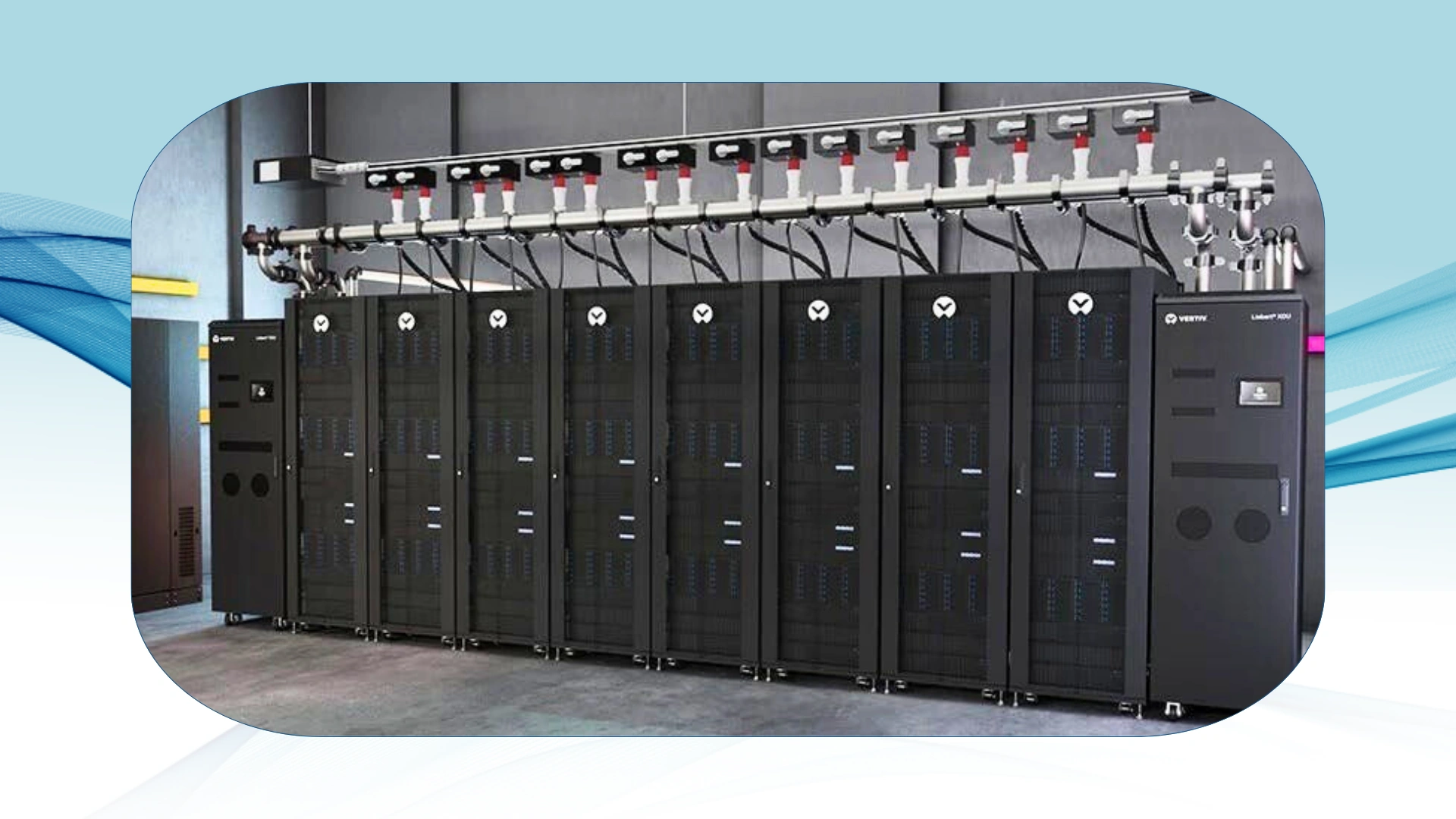
Vertiv’s Liebert XDU series of CDUs form the heart of liquid cooling systems. These units regulate the temperature and pressure of the coolant, ensuring that the system operates safely and efficiently. They also provide both liquid-to-liquid and liquid-to-air heat exchange options.
Integration into Existing Facilities: A Solution Partnership That Simplifies the Transition
New data centers can be designed with liquid cooling infrastructure from the ground up. However, in facilities that currently operate with air-cooling infrastructure, this transformation is often perceived as complex and costly. The solution lies in modular and scalable transition scenarios.
With HyperDC Data’s expertise, Vertiv’s modular liquid cooling solutions can be integrated smoothly into existing data centers in Türkiye. HyperDC Data plays an active role in project design, system installation and local technical support, minimizing operational interruptions while guaranteeing the system’s long-term efficiency.
Conclusion: The Key to Transformation in Türkiye
The growing cooling requirements of data centers, energy-efficiency targets and sustainability pressures clearly reveal the limitations of traditional methods. At this point, liquid cooling technologies do more than improve performance. They also reduce operational costs, lower the carbon footprint and provide future-ready infrastructure.
HyperDC Data is positioned as an implementation force behind this technological transformation in Türkiye. Working with a broad range of customers, particularly high-density data centers, AI-focused infrastructures, banking organizations, telecommunications companies and public institutions, HyperDC Data provides end-to-end solutions in areas including:
- Liquid cooling system design
- Integration into existing data centers
- Installation and on-site support services
- Cooling efficiency and sustainability consulting
Combined with Vertiv’s global capabilities, this local expertise prepares organizations in Türkiye not only for today’s requirements but also for the data-processing workloads of the future.
Future-Proof Your Data Center Cooling Infrastructure
Evaluate the suitability of direct-to-chip cooling, immersion cooling and CDU solutions for your existing or planned data center infrastructure with our technical team.